Showing posts with label Evaluation. Show all posts
Showing posts with label Evaluation. Show all posts
Question 7
In our prelim, the audio quality was not very good. This made the entire prelim look like an amateur piece which ruined some of the better quality shots. We overcame this by using more foley rather than relying on the camera's audio quality. This proved quite difficult as we had to ensure that it was perfectly timed to prevent it looking unprofessional. Linking with the audio issue, my group decided that it would be a better idea if we tried to film as much as possible indoors to ensure minimal audio problems.
We gained an understand of steady camera shots. We realised, from doing the prelim, how important it was to use a tripod or a moving device when filming, so that the shots were not static or jolted. From having this advice and information, we were able to improve our camera shots, ensuring that they were of a high standard, still and fitted well with each shot. Realism was a big part for us as a group, as we wanted to make our film opening serious and look professional, rather than comical and fake. Therefore, we learnt from our prelim, that in order to make the shots more realistic, you shouldn't incorporate slide transitions, because it isn't realistic, but more power point, which was not our aim.
Question 5
This video includes annotations for our doubled film opening. We did this in order to explain the choices we made. For example, music choices, location choices and character choices. Within this video, we also explain how our film will attract and address the audience and why we did this. This links back to our target audience. When making our film opening, it was very important as a group to make rational decisions, to base it and fit it around not only our themes, but our target audience. This ranges from institution choices, to music choices, to title choices and to actor choices. We wanted to attract our audience by not only creating enigma and making it exciting and thrilling to watch, but to also make it relatable to our target audience, representing todays society and the twenty first century. Furthermore, in order to attract our audience, we went with the high and well known, Universal Studio's because we felt like our film would become a big blockbuster and felt that they could help with the appropriate advertising.
Also, another way of addressing the audience would be the violent props/icons that we used within our film. This clearly represents the violent and aggressive content within our film and also representing real life situations in our society today, making the audience not only feel frightened but apart of our film, which was one of our intentions. We not only wanted our audience to feel engaged with our costumes and actors, but our story line and theme also, as we show that it could happen to anyone.
Question 4
Also, when researching who would our target audience be, we created a survey, asking over 100 men and over 100 women what they're preferred genre was. This allowed us to visually see and understand who is most likely to come and see our film, based on personal preferences. Here are the results:
As you can see, from the results, we concluded that men ages 16-28, would be our target audience. This was because the men clearly demonstrated their personal preferences and the types of films that they like to watch. However, although not as many women said that they preferred an action film, we also were able to gain the information, that some women do prefer this type of genre, style and theme. Therefore, we did not want to limit our target audience by only basing our film around men aged 16-28, which is why we felt it was important to bare in mind that there will be a lot of women and a lot of people of variety ages that will want to come and see our film. It just allowed us to gain a rough understanding.
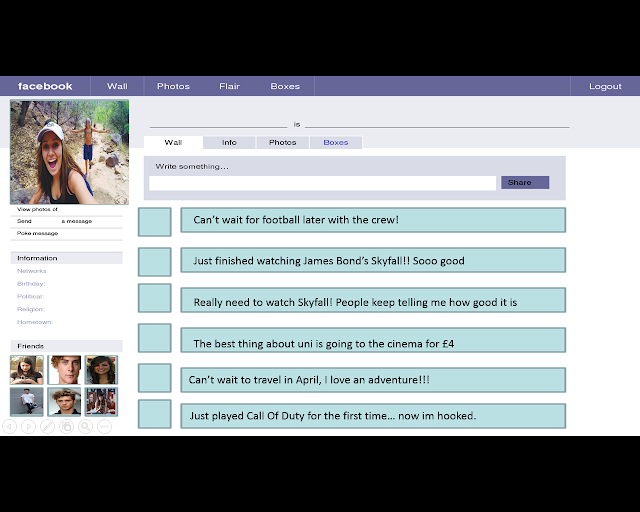
Here are some typical profile screenshots of who we think will be the main viewers of our film. We think the average age will be teenagers and males and females between the age of 16- 28. We think this because those of that age are more likely to have the spare time and be exposed to gaming, films and social life that contain action and violence.

As you can see, from the results, we concluded that men ages 16-28, would be our target audience. This was because the men clearly demonstrated their personal preferences and the types of films that they like to watch. However, although not as many women said that they preferred an action film, we also were able to gain the information, that some women do prefer this type of genre, style and theme. Therefore, we did not want to limit our target audience by only basing our film around men aged 16-28, which is why we felt it was important to bare in mind that there will be a lot of women and a lot of people of variety ages that will want to come and see our film. It just allowed us to gain a rough understanding.
Here are some typical profile screenshots of who we think will be the main viewers of our film. We think the average age will be teenagers and males and females between the age of 16- 28. We think this because those of that age are more likely to have the spare time and be exposed to gaming, films and social life that contain action and violence.


Question 3
What institutions would distribute our media project and why
Media institutions are companies that own a large amount of companies in various mass media such as television, radio, movies and internet. The top 6 media institutions are Comcast, Disney, News corperation, Time Warner, Viacom, CBS Corperation.





 Our film is most definitely a blockbuster, this means that one of the big 6 movie institutions will be producing and distributing our film. Blockbusters are made to make lots of money. Blockerbusters will be advertised everywhere and will pay a lot of money to be distributed into well known cinemas and to get advertisement on TV during big events such as the super bowl or the champions league final. Ideology is a world view, attitudes and beliefs which an individual, group or society holds to be true or important. These vary between cultures, but it is seen as the way in which the culture should function.
After deciding what genre our media project would be (action/Thriller) we looked to see which film institutions distributed the most Action/Thriller films. After looking for a while we found that Universals Studios has produced and distributed a lot of Action/Thriller movies. Universals product portfolio is full of Action/Thriller movies and is definitely their most common genre. I would say that majority of Universals films are aimed at teens e.g. Jurassic World, Fast and Furious, Kick Ass and Ride along. Universal Studios slogan is also "Jump into action", personally I think the slogan shows that universal wants fast paced films by saying jump into because jumping into something is usually a fast motion. Universal also use the word "action" in the slogan, the definition of "action" is the process of doing something, typically to achieve an aim. This shows me that Universal studies want to achieve their aims and objects as quick as possible and at a very good standard, this shows me that universal studios are motivated to work hard which would be good for us. Because Universal studios is well know to distribute films of our gene we thought that it would be a smart decision to use them to distribute our film. We also used Diamond production, they aren't mainstream but they believed in our film so we believed in them.
We did research into some other companies as well and found out that Paramount mainly does drama and Comedy, DreamWorks mostly does kids films and animations and Warner Bros does mostly comedy and drama. So are decision was that Universal studios would most suit our film because it was the most common movie genre that Universal distribute. Our film is worthy of Universal because we are a blockbuster film and we have made a film using their most commonly distributed genre. We have also done research into who would watch our film and how many people would watch our film and our research shows that we are most likely going to be successful.
Below is the director of Doubled talking about institutions used in the film and why we used them.
Media institutions are companies that own a large amount of companies in various mass media such as television, radio, movies and internet. The top 6 media institutions are Comcast, Disney, News corperation, Time Warner, Viacom, CBS Corperation.


 Our film is most definitely a blockbuster, this means that one of the big 6 movie institutions will be producing and distributing our film. Blockbusters are made to make lots of money. Blockerbusters will be advertised everywhere and will pay a lot of money to be distributed into well known cinemas and to get advertisement on TV during big events such as the super bowl or the champions league final. Ideology is a world view, attitudes and beliefs which an individual, group or society holds to be true or important. These vary between cultures, but it is seen as the way in which the culture should function.
 After deciding what genre our media project would be (action/Thriller) we looked to see which film institutions distributed the most Action/Thriller films. After looking for a while we found that Universals Studios has produced and distributed a lot of Action/Thriller movies. Universals product portfolio is full of Action/Thriller movies and is definitely their most common genre. I would say that majority of Universals films are aimed at teens e.g. Jurassic World, Fast and Furious, Kick Ass and Ride along. Universal Studios slogan is also "Jump into action", personally I think the slogan shows that universal wants fast paced films by saying jump into because jumping into something is usually a fast motion. Universal also use the word "action" in the slogan, the definition of "action" is the process of doing something, typically to achieve an aim. This shows me that Universal studies want to achieve their aims and objects as quick as possible and at a very good standard, this shows me that universal studios are motivated to work hard which would be good for us. Because Universal studios is well know to distribute films of our gene we thought that it would be a smart decision to use them to distribute our film. We also used Diamond production, they aren't mainstream but they believed in our film so we believed in them.
We did research into some other companies as well and found out that Paramount mainly does drama and Comedy, DreamWorks mostly does kids films and animations and Warner Bros does mostly comedy and drama. So are decision was that Universal studios would most suit our film because it was the most common movie genre that Universal distribute. Our film is worthy of Universal because we are a blockbuster film and we have made a film using their most commonly distributed genre. We have also done research into who would watch our film and how many people would watch our film and our research shows that we are most likely going to be successful.
Below is the director of Doubled talking about institutions used in the film and why we used them.
Question 2
Within this post, I begin to talk about the target audience. This is so that I gain a good understanding of who our target audience is, to understand the social groups we wish to aim it at. I then begin to talk and answer a variety of questions in order to establish the answer to this question.
Point 1) The social groups that we believe our media is targeted at.
Point 2) What were the survey results and how did this help you
Point 3) The results and how this helped us to understand the social groups, and then goes onto age, gender and race.
Point 4) The ages of our media and how this will benefit or affect the social groups
Point 5) Stereotypes and camera angles within our media
Point 6) The costumes that we chose, and why we chose them. How this benefits the social groups.
Point 7) The make up and hair within our media.
Within this video, I begin to say a little bit about the audience. This is so that, when learning about the representation, that it was not only clear what our target audience was, but also our aims in representation. For example, in the clip I begin to say about the ethnicities within our film. We not only wanted to include a variety of ethnicities to highlight equality, but to appear to a wider audience, creating the correct and appropriate message whilst doing so. I also speak about ages. The reason why our media representation is about ages, is because we feel like it is not only important to appeal to our target audience but to also encourage the idea of younger people being powerful. We felt as a group that many films, only have middle aged men and women playing the main and dominant characters. However, in order for our media to stand out, we thought we would make our main, dominant characters younger in order to not only be different, but so that our audience feels like they can relate to it. Futhermore, on the stereotyping subject, we also found that the typical vulnerable character is a white, young female. I also talk in the video about how we wanted to contrast this idea, by making our powerful main character a white female also, this is so that it stays away from this stereotypical film structure, but also giving the audience what they want by seeing something different but also familiar. I also go on to speak about the different costumes that we chose and why. We felt that this was important because the characters committing the heist, played a big part in our film opening. In order to ensure that all genders were seen as equal, we not only dressed them in the same colour, but the same outfits and props too. We didn't want any gender to feel weaker or stronger than the other, because as a group, this was not the message we wanted to create.
Within this video, I begin to say a little bit about the audience. This is so that, when learning about the representation, that it was not only clear what our target audience was, but also our aims in representation. For example, in the clip I begin to say about the ethnicities within our film. We not only wanted to include a variety of ethnicities to highlight equality, but to appear to a wider audience, creating the correct and appropriate message whilst doing so. I also speak about ages. The reason why our media representation is about ages, is because we feel like it is not only important to appeal to our target audience but to also encourage the idea of younger people being powerful. We felt as a group that many films, only have middle aged men and women playing the main and dominant characters. However, in order for our media to stand out, we thought we would make our main, dominant characters younger in order to not only be different, but so that our audience feels like they can relate to it. Futhermore, on the stereotyping subject, we also found that the typical vulnerable character is a white, young female. I also talk in the video about how we wanted to contrast this idea, by making our powerful main character a white female also, this is so that it stays away from this stereotypical film structure, but also giving the audience what they want by seeing something different but also familiar. I also go on to speak about the different costumes that we chose and why. We felt that this was important because the characters committing the heist, played a big part in our film opening. In order to ensure that all genders were seen as equal, we not only dressed them in the same colour, but the same outfits and props too. We didn't want any gender to feel weaker or stronger than the other, because as a group, this was not the message we wanted to create.
Question 1
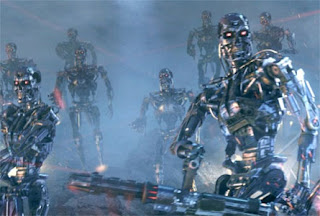
Genre Research Our genre being action, gave us a wide variety of films to turn to for inspiration. We chose this genre because it was the majority vote in our group, we also had previously come up with a storyline for an opening that would fit with the action genre which was convenient. Action generally consists a person or group facing a number of different challenges. This means there are more likely to be chase scenes, fights, and life threatening situations, all of which have been included in our film opening. In multiple famous action films there is a villain for example Die Hard is an action film about a detective who encounters a terrorist and must take on a group during a heist. A typical stereotype of action films is that many special FX are used which highlights the impressive modern use of technology making it look new, different and appealing to a wider range of audience. Action films typically have the most enigma, leaving you feeling on edge throughout and leaving you wanting to see more.




Codes & Conventions
Commonly set in big cities, action films revolve around modernised areas rather than quieter places to give a busy atmosphere building up enigma and tension.


Sequence Development
- We initially had the idea of doing an army themed opening, basing it on a boy named Sam who grows up to be a soldier, which has been his dream since he was a child. We were going to show his growing up through a timeline style starting at age 3 of real footage of a child saying he wanted to be 'Soldier Sam'. All our group members liked this idea and we had thoroughly planned the shots we were going to take, the risks and how to overcome them however we concluded that the shots would've been too hard to shoot in the time frame we had. We appropriately went back to 'step 1' of our individual film pitches, having agreed we were going to stick with the genre of action, and discussed ideas and thoughts towards a new opening. This is when we discovered the Heist idea would turn out to look effective if we managed to pull it off seeing that the preparation time we had was shortened due to the change of storyline. We put in many extra hours so we had made up for missed time to ensure completion by the deadline. To begin with, with our initial plan of the Army storyline we were going to mainly focus on getting close up shots to show that the film was based purely on an individual. For shots that Sam was not going to be featured in, we would make it a long shot to show lack of importance to small detail.
Narrative
We decided we wanted some enigma rather than a lot in our opening to diminish confusion. The audience will be questioning why the characters are in the house, also they will wonder why at the end one of the characters say they are looking for their sister. Often in action films there is a lot of enigma throughout as the film is usually a constant cycle of enigma and solving enigma similarly in Luther and Sherlock. Audiences tend to sit on the edge of their seats when watching a film with a lot of action, spectacle and enthusiasm as it connects directly with their feelings. Film openings make it hard to show layer of meaning (Semantic code in Barthes' theory) however at the end where the scripted scene occurs and the character says 'What do you mean you haven't found my sister?' this could have a number of different interpretations therefore showing a layer of meaning. We have included the symbolic code by using props such as balaclavas to show the nature of our characters. Balaclavas symbolise danger due to the lack of facial features exposed creating a sense of unease to the audience and sympathy for the young girl in the house alone.9 shot grid

Subscribe to:
Posts (Atom)